Gelingen. Gelingen
Mar 20 2026– May 20 2026
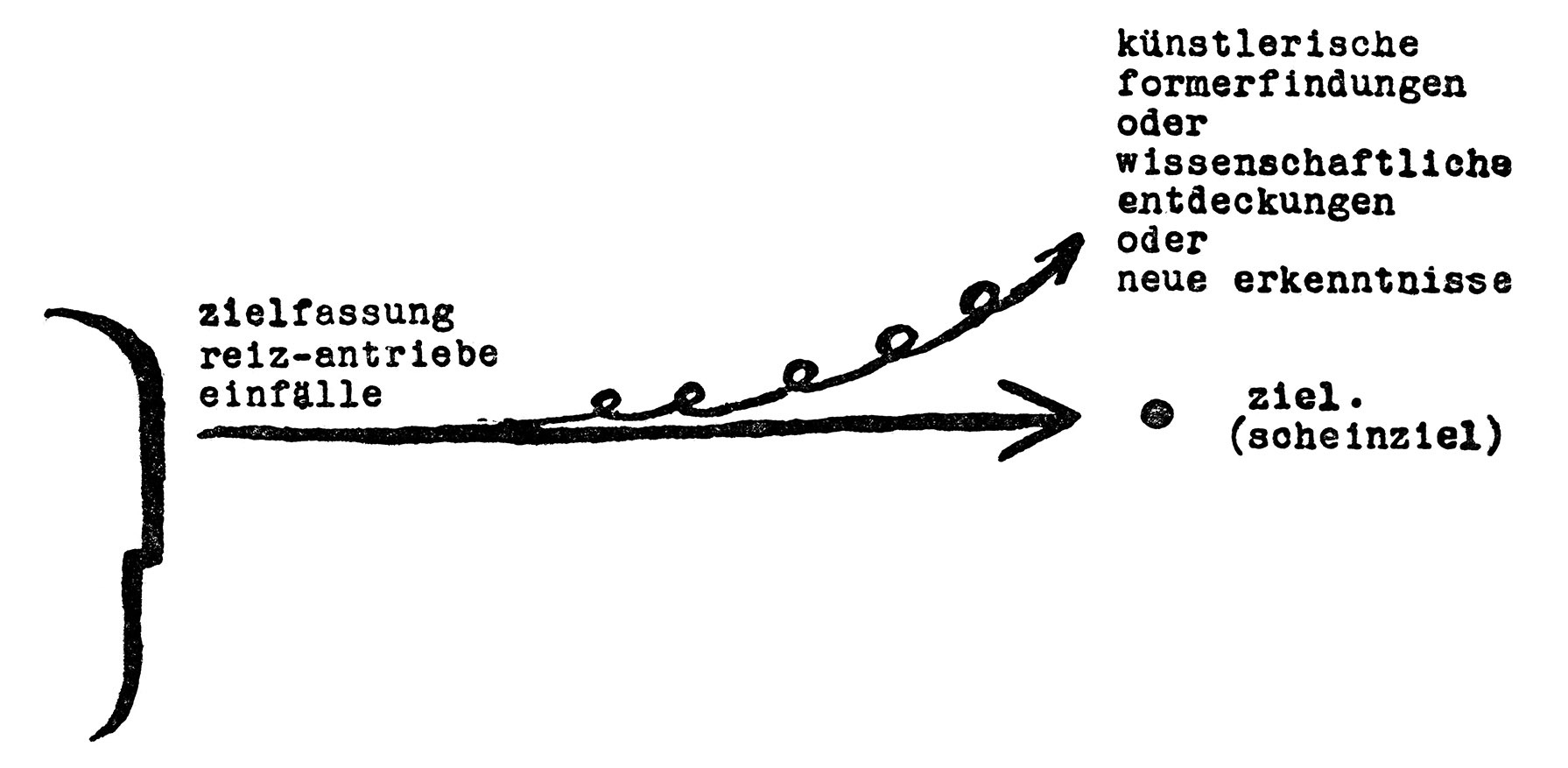
The painter Willi Baumeister called the deviation from the artist’s intended aim — caused by the material’s resistance — a “creative angle”, and saw this intrusion as essential to the very making of art. The exhibition on “success” (ger. Gelingen) aims to recall this process, which is not entirely subject to the artist’s will. In the holdings of Galerie Elisabeth & Klaus Thoman, there are many works in which the struggle between idea and material has ended happily. The resultbecomes all the more spectacular the more risky the initial conditions are.
For this reason, Éva Bodnár’s paintings provide a guiding motif for the exhibition: at first glance they appear rather random and uncontrolled, yet upon closer inspection a compelling result emerges. Mai-Thu Perret alludes to this latent misunderstanding in the title of one of her sculptures: Unaware it was a jewel, he thought it just rubble (2020, glazed ceramic).
Painting has always been the artistic discipline that sought to let the idea emerge from the process. (A similar principle can be found in ceramics, whose processes of formation are illustrated by another sculpture by Mai-Thu Perret.) Sarah Bechter and Johannes Wohnseifer offer alternative methods of achieving success with their works. Bechter introduces batik, a technique in which color gradients cannot be fully controlled. The resulting chance forms are then painterly concretized into figures. The Polaroid Paintings (2017–2024) by Wohnseifer place painting in relation to technical reproduction and photography.
What might have been considered a failure in that context is here effortlessly integrated into the history of painterly abstraction—without the painter himself appearing to be compelled toward any particular form. The twists and turns of the material must sometimes first be assessed as “errors”.
In any case, the traditional process of form-finding within the “creative angle” has been undermined by technology (as well as by conceptual art). This is echoed in the video final play (2013) by Julia Bornefeld, which presents a burning grand piano while oscillating between representation and abstraction.
The negotiation process between idea and material inevitably begins in the abstract, with pure materiality. Only through the working process does the work acquire meaning; forms charged with significance emerge that refer to a reality beyond the image.
The tension between abstraction and representation therefore forms a second motif in this exhibition. With a delicate, drawing-like intervention on one of the large shop windows—which, like Oswald Oberhuber’s number paintings, recalls Marcel Duchamp—Paul Thuile draws attention to this unstable relationship to reality. The presence of the two senior figures, Oberhuber and Bruno Gironcoli, suggests that the idea of success is by no means merely a contemporary phenomenon.
JULIA BORNEFELD, JOHANNES WOHNSEIFER,
SARAH BECHTER, PAUL THUILE, MAI-THU PERRET,
ÉVA BODNÁR (in order of their appearance)
BRUNO GIRONCOLI, OSWALD OBERHUBER (cameos)
Stephan Schmidt-Wulffen (curator)