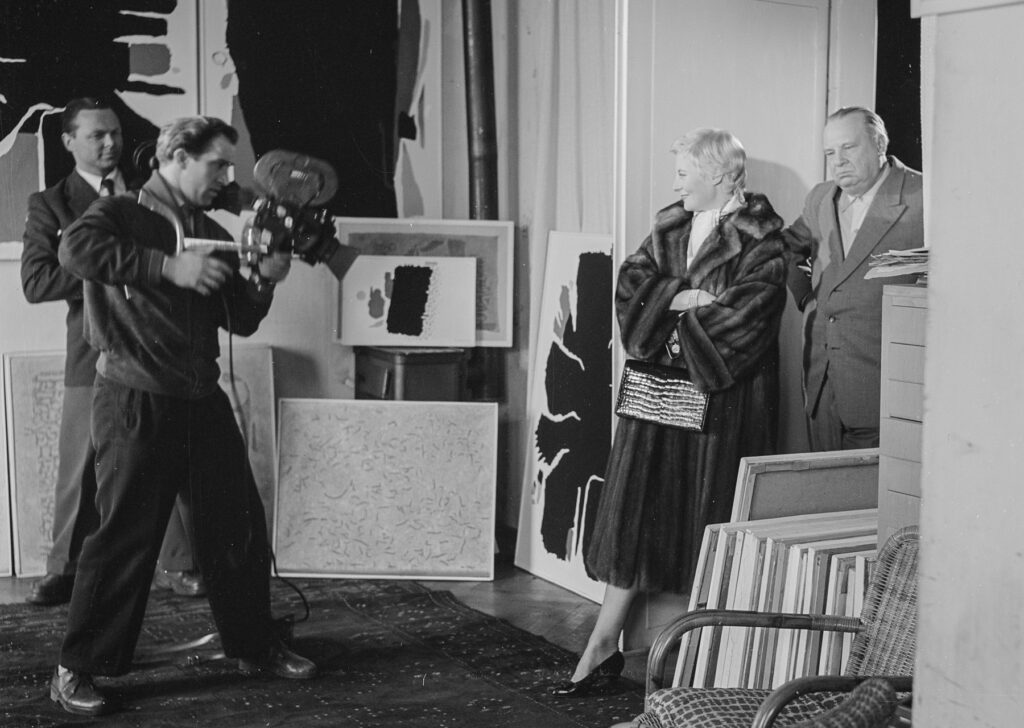
The art my father created
Felicitas Baumeister remembers growing up with the art of her father, Willi Baumeister. When she was born in 1933, her father wrote in his diary: “… the child is normal.” Otherwise, little else was normal that year. Baumeister lost his professorship at the Städelschule in Frankfurt as a “degenerate artist.” The young family moved to Stuttgart and a period of internal emigration began.
Felicitas grew up during this time, experiencing the war, but above all the post-war period, which brought her father great artistic recognition once again. She remembers: her own childhood with her painter father. The creation of the book “Das Unbekannte in der Kunst” (The Unknown in Art) during the war. She remembers the artists she met, such as Paul Klee, Joan Miró, Fernand Léger, and, of course, Oskar Schlemmer. She remembers Baumeister’s exhibitions in Paris and important collectors such as Ottomar Domnick. She leafs through family photo albums and Willi’s diary. Felicitas brings unpublished letters and photos, old newspapers, drawings, and collages from the estate to light.
When her father died unexpectedly in 1955, Felicitas was just 22 years old. Together with her mother and sister, she began to catalogue Baumeister’s work. This task became her life’s work. Catalogues raisonnés were compiled over many years, exhibitions were supported, and the archive grew. An important step was taken in 2005 with the integration of the Baumeister Archive into the Kunstmuseum Stuttgart.
Her father’s estate is now affiliated with the museum and has become an easily accessible research centre. Felicitas’s memories are commented on by Ulrike Groos (director of the Kunstmuseum Stuttgart), Peter Chamentsky (University of South Carolina), who conducted research in the Baumeister Archive for many years, and Hadwig Goez, director of the Baumeister Archive.
The puppet show “The Colour Guardian”
This puppet show was created in close collaboration with director and puppeteer Dragica Ivanovic as part of the special exhibition ‘In the Spotlight: Baumeister as Stage Designer’ at the Kunstmuseum Stuttgart in 2007, which dealt with the theme of theatre and presented stage designs by the artist Willi Baumeister.
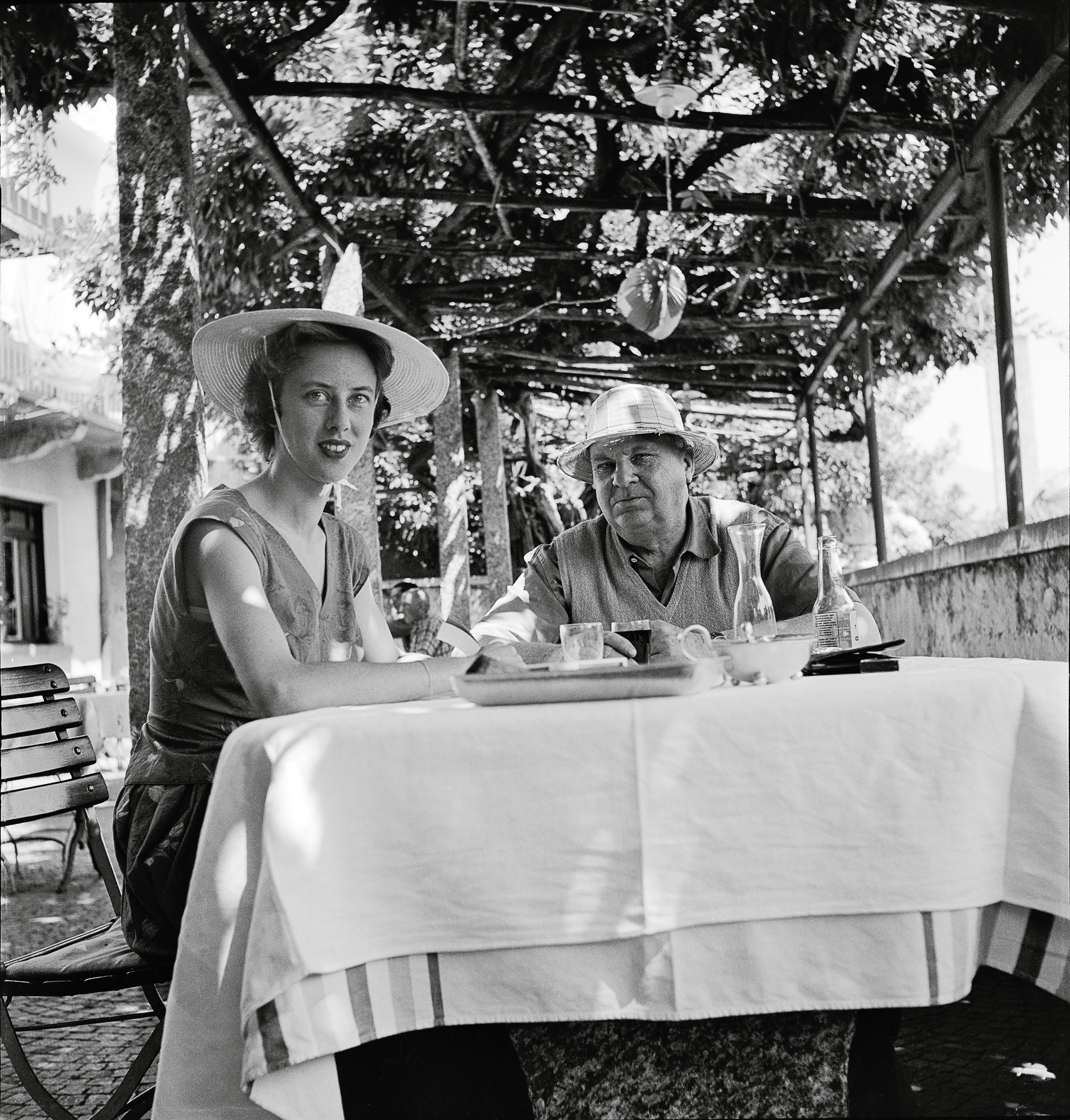
The abstract motif of the late ‘Montaru’ paintings – a large black spot in the centre, next to which smaller, brightly coloured shapes appear – served as the template for the piece. Baumeister not only varied this motif in over 50 paintings, but also incorporated it into a stage design for the play ‘Kasperle-Spiele für große Leute’ (Puppet Shows for Grown-ups), which was also shown in the special exhibition. In the paintings, the artist plays with ever-changing combinations of the black form with mostly red, blue and yellow pictorial elements that float against a white background and appear to be in motion. Fine black antennae, which feel their way out of the black form into the picture plane, reinforce the impression of dynamism. By modifying forms and proportions, Baumeister explores the correlation between colours and their respective effects. The narrative element of representational painting recedes in favour of a play of forces between autonomous pictorial elements, in which the colours seem to compete for dominance. The theme of autonomous colours detached from the object was presented in a child-friendly way as a competition between colours.
Five characters appear in the play: the colours red, blue, yellow, black and the colour guardian Karl. Karl is a lovable, slightly absent-minded character who has been guarding Willi Baumeister’s paintings and especially his colours for many years. By changing their positions and locations, the colours in the puppet show demonstrate various compositional possibilities. They raise questions that the painter himself might have asked: How does the effect of the picture change when the colours swap places? Which colour shines brighter against a black background – red or blue? In this way, the creative process is playfully illustrated in the puppet show.

Production:
bilder in bewegung, Karsten Hopp
Willi Baumeister – a film by Ottomar Domnick
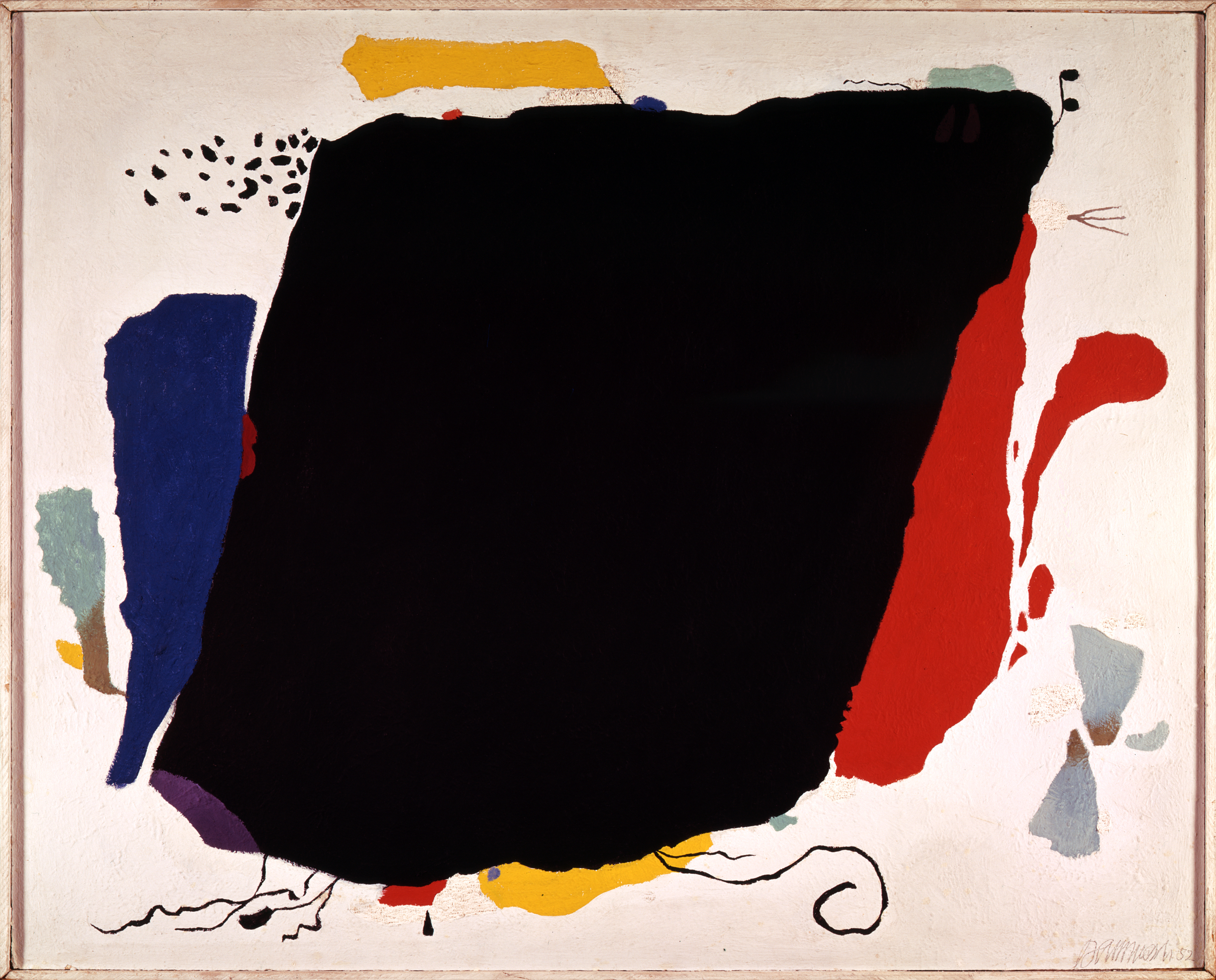
In 1954, the premiere of the film ‘Willi Baumeister’, directed by Ottomar Domnick, took place in Amsterdam. It ran successfully at various film festivals and received several awards. The first scenes of the film, which were dubbed into several languages, had been shot in 1952 in the artist’s atelier. In recent decades, the cultural film has, however, been rarely shown —mostly for events accompanying exhibitions.
Abstract art, which in the 1950s still led many of his contemporaries to shake their heads, inspired filmmaker Ottomar Domnick. He was passionate about the idea of making new art more comprehensible. This art film shows artist Willi Baumeister in his atelier and at his work.
In just under 30 minutes, it introduces you to the world of the artist’s images, and moreover presents a short sequence of scenic shots of a theatre performance designed by Baumeister. Domnick works with associative image comparisons, and illustrates the making of a painting with special-effects sequences, clever transitions and elucidation. He further emphasizes the modernity by utilising a backdrop of music that includes an electronic accordeon — an entirely new instrumental concept.
Further information can be found in the detailed booklet accompanying the DVD, which was published to mark the 60th anniversary of the death of Willi Baumeister (1889–1955) in collaboration with the Archiv Baumeister at the Kunstmuseum Stuttgart, the Domnick Foundation and the Willi Baumeister Foundation.
TRIGGER WARNING:
This documentary film is being shown in its original version as a source of contemporary history. It contains racist and discriminatory language. The Willi Baumeister Foundation and the Domnick Foundation expressly distance themselves from any form of discrimination.
Further information on the Domnick Collection can be found at https://www.domnick.de/
A stroll through Frankfurt’s galleries
TV report from 31 August 1961 hr Retro | hessenschau
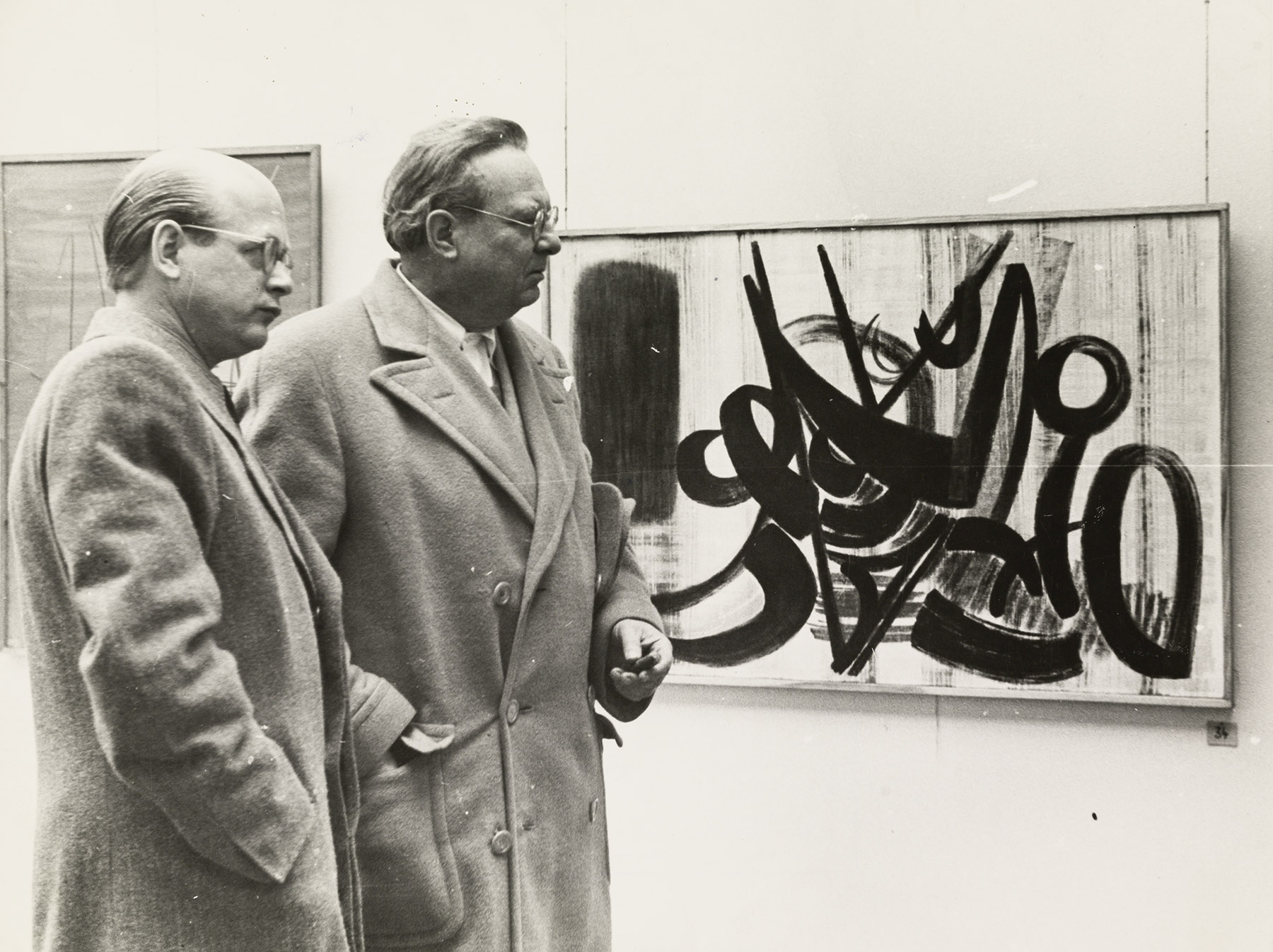
In the summer of 1961, two art exhibitions stood out in Frankfurt. The Karl Vonderbank Graphic Art Gallery was showing works by the French artist Bernard Buffet. The Hanna Bekker vom Rath Art Gallery in Frankfurt was presenting paintings by Willi Baumeister: